Showing posts with label Beetles. Show all posts

Tuesday, February 9, 2010

Beetle mania


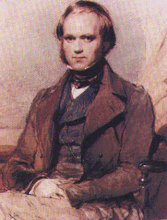
Charles Darwin’s interest in natural history goes back at least to his days as a college student, although not as an area of study but as an avid hobby.


While a student at Cambridge Darwin took up the Victorian mania for collecting beetles. One day he had collected two beetles, one in each hand, when he spied a third new kind, and in his words, “I popped the one which I held in my right hand into my mouth. Alas! It ejected some intensely acrid fluid, which burnt my tongue so that I was forced to spit the beetle out, which was lost, and was the third one.“


Despite that miscue, Darwin’s beetle-collecting hobby laid his foundation in collecting, identifying and classifying natural history specimens, and taught him something about proper field collecting techniques.


Photo credit: http://www.ent.iastate.edu/imagegal/coleoptera/dogbane/dogbane_beetle.html

Wednesday, January 13, 2010

The first beetle


The oldest known fossil beetle has been discovered not in an outcrop, but in a museum drawer. A 296 million year old insect has been reclassified as a beetle, pushing back the origin of beetles by millions of years.

The evolutionary success of beetles is traditionally explained by their two-stage life style—they pass through ecologically distinct larval and adult stages that allow them to exploit different niches.

However, the new find creates a large gap between the first appearance of beetles and the diversification of beetles that occurred 65 million years later, and suggests that the innovation of the two-stage lifestyle was not the initial cause of beetle diversity.

This opens the door to other explanations for beetle success, such as the proliferation of the plant species that was favored by the beetle larvae.

Reference: Journal of Paleontology November, 2009, The Earliest Beetle identified (Olivier Bethoux)

Photo credit: This is a much younger fossil beetle from the Eocene (15 million-year-old) Florissant Fossil Beds of Colorado, which preserves a wide variety plant and animal life. Click on today's title for more information.