Showing posts with label Religion. Show all posts

Wednesday, April 7, 2010

Science & Religion: Viva la difference!


Religious belief or faith is an example of a non-scientific way of understanding the universe.


The Apostle Paul defined faith as “being sure of what we hope for and certain of what we do not see” (Hebrews 11:1, New International Version). Faith and religious belief, while essential elements of what makes us human, describe an area outside of scientific inquiry.


The faithful are exhorted to having faith like a rock, unmoving, unchanging, solid; all important qualities in a belief system, but qualities that are counterproductive to scientific inquiry.


Our scientific understanding of the universe—where it came from, how it evolves—continues to change with new observations, new data. Our philosophical understanding of our place in the universe, why we are here, what our purpose is, is the purview of philosophy and religion.


Science and religion are different ways of understanding the universe, both important but occupying separate realms.


Photo credit: http://www.cuttingedge.org/NEWS/earth7.jpg

Tuesday, March 30, 2010

A definition of "Science"


So just what is science?

The dictionary explains that the word comes from the Latin “scientia” meaning “knowledge”, but there are different kinds of knowledge and different ways of accumulating knowledge. Science is the branch of knowledge built on observations of the natural world systematically arranged to reveal patterns. Scientists seek to discover and document these patterns and ultimately understand their underlying causes.

The purpose of science is to understand, explain, and to predict natural phenomena, it is not the purpose of science to judge, rank, or otherwise assign value to the phenomena—that’s the role of other ways of understanding the world, the role of philosophy, the arts, and religion.

Science is best suited to answer the “who, what, where” sorts of questions; the other paths of inquiry are better suited to answer questions related to the ultimate purpose of things.

Photo credit: http://undsci.berkeley.edu/images/us101/scientists.jpg

Nature of science, 1


Sixty-six percent of adults in a USA Today/Gallup Poll* responded with “definitely” or “probably true” to the statement that “God created human beings pretty much in their present form at one time within the last 10,000 years”.

Of course, this explanation is not taught in science classes because it is a conclusion that is not based on science but a religious text. The pervasiveness of this erroneous viewpoint points to a fundamental confusion in the minds of many people about what science is and how it works, the areas of human experience that science can and cannot address, and a perceived conflict between the findings of science and personally held beliefs.

So just what is science and what does it do? Continued tomorrow...

*http://www.pollingreport.com/science.htm

photo credit: http://imagecache2.allposters.com/images/pic/MCG/FPF631~Adam-and-Eve-Posters.jpg

Sunday, March 28, 2010

Nature of Science, 2


So just what is science?

The dictionary explains that the word comes from the Latin “scientia” meaning “knowledge”, but there are different kinds of knowledge and different ways of accumulating knowledge. Science is the branch of knowledge built on observations of the natural world systematically arranged to reveal patterns. Scientists seek to discover and document these patterns and ultimately understand their underlying causes.

The purpose of science is to understand, explain, and to predict natural phenomena, it is not the purpose of science to judge, rank, or otherwise assign value to the phenomena—that’s the role of other ways of understanding the world, the role of philosophy, the arts, and religion.

Science is best suited to answer the “who, what, where” sorts of questions; the other paths of inquiry are better suited to answer questions related to the ultimate purpose of things.

Photo credit: http://undsci.berkeley.edu/images/us101/scientists.jpg

Wednesday, February 3, 2010

Darwin & God


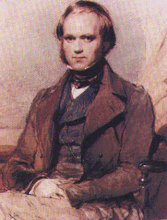
Because Darwin advocated natural processes for explaining life on Earth, rather than invoking the special creation of every organism by a omniscient being, another widely held misconception about Darwin was that he did not believe in God.

In fact, Darwin was a deeply devout man who studied to be a clergyman at Cambridge, but who also had his faith severely tested by several personal tragedies including the death of three of his children.

Near the end of his life, Darwin described himself as an agnostic—one who concludes that God is "unknowable", that humans cannot prove or disprove the existence of a God. He wrote, ""I cannot pretend to throw the least light on such abstruse problems. The mystery of the beginning of all things is insoluble to us; and I for one must be content to remain an agnostic."

Darwin never lost his sense of wonder at the beauty and intricacy of the natural world and strove to uncover the natural laws that resulted in what he described at the end of his book “Origin of Species” as “endless forms most beautiful"

Photo credit: http://caxton.emich.edu/guide/images/darwin-god.jpg