Showing posts with label Fossils. Show all posts

Wednesday, October 13, 2010

National Fossil Day


The record of life on Earth is written in stone--

National Fossil Day is a celebration organized by the National Park Service to promote public awareness and stewardship of fossils, as well as to foster a greater appreciation of their scientific and educational values.
Learn more...


Thursday, June 10, 2010

Birds of a feather


The discovery of feathered dinosaurs led to our understanding that birds are the descendents of dinosaurs, specifically the group of dinosaurs that includes the sauropods, like Apatosaurus and the theropods like Tyrannosaurus.

However, the discovery of feather-like structures in a small dinosaur from the other major dinosaur lineage—the group that includes Triceratops and Steogsaurus—complicates things.

Tianyulong is a small herbivorous dinosaur from China with feather-like structures along its spine and tail. Paleontologists are not yet sure whether these are feathers as seen in other feathered dinosaurs, or some other sort of body covering evolutionarily unrelated to true feathers.

Scientists refer to the structures on Tianyulong as “dinofuzz”, a fitting term because this new fossil fuzzes up our picture of dinosaur-bird relationships, at least for now.

Source: Xio-ting Zheng, et al., 2009, An Early Cretaceous heterodontosaurid dinosaur with filamentous integumentary structures. Nature 458:333-336.

Thursday, May 13, 2010

Footprint forensics


330 million years ago, during the Carboniferous Period, a marine-dwelling arthropod hoisted itself out of the water and dragged its tail-like telson across the wet mud.

The record of this early excursion is a 6-meter-long trackway preserved in sandstone from Scotland. The trackway is attributed to a euyrpterid or “sea scorpion” whose fossil remains are known from the area.

The trackway consists of two parallel rows of footprints and a continuous groove in the middle marking the telson dragmark. The width of the trackway, indicates that the animal was 1 meter wide, and perhaps 2 meters long. The telson drag mark suggests that the animal was moving out of water, because underwater the eurypterid would not have dragged its telson.

The trackway confirms suspicions that some eurypterid could leave their aquatic habitat and venture onto land. These footprints also have the distinction of being the largest known tracks of an invertebrate.

http://news.bbc.co.uk/2/hi/uk_news/scotland/edinburgh_and_east/8632427.stm

How much wood would a woodchuck chuck...


The tongue-twister about woodchucks could be asked of Castoroides ohioensis, the so-called giant beaver that inhabited North America during the last ice age, about 14,000 years ago.

The ice age animal was about twice the size of modern beavers, but, surprisingly, there is no evidence that the ice age beaver ate wood.

We are what we eat, and researchers from Michigan State University and the University of Wisconsin studied the isotopic composition of a jawbone of the ice age beaver and found that the ratio of carbon 13 to carbon 12 did not match that expected for an animal that ingested wood, but was closer to that of an animals that dined on aquatic plants.

The scientists compared the giant beaver to be, ecologically, “like little hippos.”

Source: Catherine Yansa, Geological Society of America Meeting, October 19, 2010

Geological Society of America Abstracts with Programs, Vol. 41, No. 7, p. 257

Reported by Perkins, S., Science News, November 21, 2009

Illustration (inset): giant beaver compared to modern beaver. From www.nature.ca

Wednesday, May 12, 2010

Before "Jaws"


Ichythosaurs, the dolphin-shaped, marine-dwelling reptiles of the Mesozoic Era, shared the Mesozoic seas with other reptile predators, like mosasaurs and plesiosaurs, but the discovery of a 10-meter long ichthyosaur from 240 million year old rocks in Nevada lays claim to top carnivore in Early Mesozoic marine ecosystems.

The Nevada ichythosaur has serrated teeth, previously unknown in ichythosaurs from this age. Other ichythosaurs of this time had conical teeth fit for grabbing fish and swallowing them whole, or blunt teeth suited for crushing shelly invertebrates like ammonites.

Later ichthyosaurs had serrated teeth, but did not reach the size of the Nevada specimen. This new find indicates that ichythosaurs were ecologically more diverse early in their evolutionary history than previously suspected.

Source: Nadia Frobisch, September 23, 2010, Society of Vertebrate Paleontology meeting.

Illustration from : http://www.marshalls-art.com/images/ipaleo/paleopg17/Ichthyosaurs_final.jpg

Tuesday, March 16, 2010

Archaeopteryx brain scan


Modern medical technology has made it possible to study old anatomies.

Computerized tomography, or CT scanning can be used on fossils to study their internal structure. CT scans of the brain case of an Archaeopteryx skull shows that this transitional form between reptiles and birds had a brain region associated with vision that made up almost 1/3 of the brain’s volume.

The lobes associated with hearing and muscle coordination were also well-developed. The ratio of brain volume to body mass is higher than that associated with modern reptiles but a bit less than that for modern birds, more evidence for the intermediate position Archaeopteryx occupies between birds and reptiles.

CT scans also showed that the structure of the inner ear of Archaeopteryx more closely resembles tat of modern birds than reptiles.

In sum, it appears that Archaeopteryx had well developed senses of hearing, balance, and sight, traits that support the hypothesis that Archaeopteryx was capable of flight.

The photo is from http://digimorph.org/specimens/Archaeopteryx_lithographica/ check it out to rotate it and examine the skull from other angles.

Sources:

Science News Aug. 7, 2004, p. 166

Timothy B. Rowe, Nature, August 5, 2004

Monday, March 15, 2010

Early bird hatchlings got their own worms


A 121-million-year-old fossilized bird embryo from China provides evidence that at some ancient chicks were able to care for themselves after hatching.

The China fossil bird is well-ossified, with nearly complete feathers and a large skull, indicating that the hatchling was able to walk and feed independently upon hatching.

Younger fossil bird embryos from 75 million-year old rocks in Argentina do not have feathers preserved. The difference between the China and Argentina embryos might indicate an evolutionary trend in hatchlings, from precocial to altricial in that 45 million year time span, or it may reflect preservation differences; Argentina embryos may have been at an earlier stage of development or had feathers that were not preserved.

It will take a few more discoveries of well-preserved fossil hatchlings to confirm the hypothesis.

Sources:

Science News 23 Oct. 2004, p. 166

Science Oct. 22, 2004 Zhonge Zhou and f.Zhang

Monday, March 1, 2010

You are what you poop


Not the most delicate way to put it, but true, as some paleontological sleuthing shows...

Scientists went prospecting along Alaska’s Yukon River, not for gold, but for soil samples in the permafrost looking for DNA from the urine and feces of ice-age mammals.

They struck it rich, and identified DNA from mammoth, bison, moose, horse, and snow shoe hare. The mammoth and horse DNA came from sedimentary layers about 10,000 years old—that is more recent than the youngest known fossil bones of these animals by at least 300 years.

The permafrost DNA implies that these species survived longer than originally presumed on the basis of the skeletal fossil remains, and indicates that the ice-age extinction of large mammals in North America was not a sudden event as previously thought.

Photo credit and more info: http://www.physorg.com/news180095166.html

Saturday, February 13, 2010

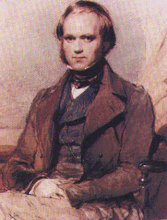
Charles Darwin, Paleontologist


Along with collecting modern plants and animals during his sojourn on the Beagle, Charles Darwin collected fossils.


He is credited with being the first scientist to examine fossils in the Falkland Islands, where he collected fossil brachiopods, but he is better remembered for the large bones of extinct fossil mammals that he found on his excursions in Patagonia, mastodon, giant ground sloths called Megatheria, and the armadillo-like Glyptodon, and fossil horses, which previously were unknown in the Americas.


Darwin sent his fossils back to England, where the leading British anatomist of the day, Richard Owen, described and published Darwin’s finds. Darwin’s paleontological training continued after he returned from the Beagle voyage, and he became an expert on fossil barnacles.


Image: reconstructions by Richard Owen based on fossils collected by Charles Darwin.

Wednesday, January 13, 2010

The first beetle


The oldest known fossil beetle has been discovered not in an outcrop, but in a museum drawer. A 296 million year old insect has been reclassified as a beetle, pushing back the origin of beetles by millions of years.

The evolutionary success of beetles is traditionally explained by their two-stage life style—they pass through ecologically distinct larval and adult stages that allow them to exploit different niches.

However, the new find creates a large gap between the first appearance of beetles and the diversification of beetles that occurred 65 million years later, and suggests that the innovation of the two-stage lifestyle was not the initial cause of beetle diversity.

This opens the door to other explanations for beetle success, such as the proliferation of the plant species that was favored by the beetle larvae.

Reference: Journal of Paleontology November, 2009, The Earliest Beetle identified (Olivier Bethoux)

Photo credit: This is a much younger fossil beetle from the Eocene (15 million-year-old) Florissant Fossil Beds of Colorado, which preserves a wide variety plant and animal life. Click on today's title for more information.

Tuesday, January 12, 2010

A New Last Occurrence


Headlines in paleontology usually center on the oldest or first find of a fossil species. However, determining the youngest or last occurrence of a now-extinct species is just as important.

A youngest occurrence was recently confirmed for an extinct group of echinoderms, the phylum that includes starfish, sand dollars, and brittle stars.

Edrioasteroids are one of a number of bizarre echinoderms that went extinct by the end of the Paleozoic Era for reasons not yet understood. These silver-dollar sized, disc-shaped animals lived attached to shells or other hard surfaces on the sea floor.

This discovery comes as paleontologists focus their energy on looking for these fossils in younger rocks to answer questions about the reason for their demise.

Photo credit: drydredgers.org

For more pictures of edrioasteroids click on today's title.

Reference: Journal of Paleontology November, 2009, First definite record of Permian Edrioasteroids: Neoisorophusella from Russia


Monday, January 11, 2010

Great Fossil Faunas, V: The La Brea Tarpits


All the previously described lagerstatte are deposits of organisms from a marine environment. The fifth and final pick for "greatest fauna" is something completely different: The fossils encased in the La Brea tarpits were land-dwellers who became entrapped in a natural asphalt spring, and if for no other reason, the unique environment and fossilizing agent earn the La Brea tarpits a place on our list of top 5 fossil faunas.

How can an animal be so stupid as to fall into an asphalt pool? These were probably not steaming or bubbling pits like the mudpots and geysers of Yellowstone, but still pools of dense oil muck camoflaged by plant debris and perhaps even holding a pool of water.

Animals that came to take a drink got stuck, their distress cries were heard by predators who themselves became ensnared, and finally scavengers that came along for the easy pickings became mired in the muck—leaving a record of the whole food chain, from plants to insects to mammoths to saber tooth tigers and vultures—650 species of plants and animals so far identified, on the basis of 3.5 million fossils recovered, an astonishing diversity of animals that gives us an unprecedented window into an ice-age ecosystem.

Photo from www.papermag.com/blogs/2008/11/mr_mickeys_mustsee_guide_to_la_1.php

Friday, January 8, 2010

Great Fossil Faunas, IV: Solnhofen Limestone


This famous lagerstatte from southern Germany is an obvious choice for a “greatest fossil fauna” list because it is in these fine-grained limestones representing the deposits of an ancient lagoon that the fossils of Archaeopteryx were found.

Archaeopteryx was the first evidence for a link between birds and reptiles, and the discovery of the first specimen came only a few months after Charles Darwin published Origin of Species, in which he made the case for a common ancestry for all organisms.

One of Darwin’s most vexing problems was the apparent lack of the transitional forms between major groups that his theory predicted, and the discovery of Archaeopteryx was an answer to this dilemma.

The lagoon that preserved Archaeopteryx down to its feathers also preserved insects, crustaceans, and echinoderms in exquisite detail, and give us a glimpse into a 150-million-year-old nearshore ecosystem.

For more info on Archaeopteryx click on the title of today's blog.

Wednesday, January 6, 2010

Great Fossil Faunas, II: The Ediacara Fauna


The oldest known fossils of multicellular organisms are known from rocks of what was formerly called the Precambrian Eon.

The Precambrian was long regarded as a time before life appeared, as there were no known fossils from the ancient rocks. The appearance of abundant shelly fossils was taken to mark the end of the Precambrian and the beginning of the subsequent Cambrian Period.

Because of the presumption that Precambrian rocks contained no fossils, the first discovered Ediacarian organisms were not recognized as being organic remains. It was only after multiple similar faunas from Newfoundland, Africa, Australia, and England were discovered that the true significance of these strange creatures was appreciated.

For smashing one of the earliest paradigms of fossil distribution, the Ediacara biota earns a spot on our list of 5 great fossil faunas.


For more information on the Ediacaran organisms click on the title, above.

Tuesday, January 5, 2010

Great Fossil Fauna, I: Gunflint Chert Flora


The Gunflint chert is part of a sequence of 1.8 billion-year-old rocks exposed in the Gunflint Range of northern Minnesota and western Ontario along the north shore of Lake Superior.

These rocks contain stromatolites, organo-sedimentary structures formed by cyanobacteria trapping and binding sediment, and when examined under the microscope, small spheres, rods and filaments less than 10 micrometers in size are visible in the chert layers--microfossils preserved in near-pristine 3-D.

The discovery of the Gunflint chert caused a paradigm shift in paleontology, as it proved that under exceptional conditions, even very ancient lifeforms could be preserved.

For its role in opening our eyes to the presence of life in very ancient rocks, the Gunflint chert earns a place on our list of “top 5 fossil lagerstatte”

Photo credit: http://www.fas.org/irp/imint/docs/rst/Sect20/A12.html

Monday, November 16, 2009

Origin, Chapter 6, Difficulties on Theory


This chapter is a preemptive strike against anticipated criticisms of Darwin’s ideas.

One obvious potential flaw in Darwin’s theory of common descent was the apparent lack of transitional forms linking different groups in the fossil record. Darwin himself asked, “Firstly, why, if species have descended from other species by insensibly fine gradations, do we not everywhere see innumerable transitional forms?” Darwin’s response to this question was to invoke the imperfection of the geological record, the fact that fossilization is the exception rather than the rule. Darwin wrote, “The crust of the earth is a vast museum, and the natural collections have been made only at intervals of time immensely remote.”

Darwin’s theory of gradual change made the prediction that transitional forms should exist, and this prediction has been borne out many times in the 150 years since publication of the “Origin” by new fossil discoveries.

Image: Archaeopteryx, whose discovery just after publication of the Origin lent support to Darwin's theory.


Wednesday, October 21, 2009

Whither Piltdown Man?


How could an obvious fraud like Piltdown Man be accepted as legitimate for over a half-century? Harvard paleontologist Stephen Jay Gould defined four factors that shaped public perception (and thus acceptance) of Piltdown:

I. The imposition of strong hope upon dubious evidence. In the case of Piltdown Man, national pride was at stake. France had cornered the market on paleoanthropological findings--Neandertals, CroMagnon, cave paintings. Piltdown, if real, would have pre-dated the hominid material from France, and England would reign supreme in this area. There was no love lost between French and English scientists.

II. Reduction of anomaly by fit with cultural biases. One of the reigning cultural biases of this time was the idea that in human evolution the brain got larger (which was seen as indicating more intelligence) and other morphological change followed. This model predicted the existence of hominid fossils with relatively large skulls and simian bodies. Voila! Piltdown was exactly what paleo-anthropologists of the time would have expected to find.

III. Reduction of anomaly by matching fact to expectation. After the fraud was discovered, it was obvious to anthropologists that the skull was human, the jaw belonged to an orang-utan, and that the pieces did not belong together. Before the revelation of fraud, however, scientists favorably disposed to the idea of Piltdown saw what they wanted to see and shaped the facts to fit their model of Piltdown as the oldest human relative.

IV. Prevention of discovery by practice. During the time of Piltdown's discovery and description, many museums, including the British Museum of Natural History, were not inclined to grant access to their material. Instead, it was treated proprietarily. In the case of Piltdown, researchers could look but not touch. Only a set of plast models of the bones could be handled. but only in the original bones could the fraud be detected--the artificial staining and filing down of the teeth did not show up in the plaster casts. Even famed paleoanthropologist Louis Leaky was not allowed to closely examine the original bones.

Could a hoax like Piltdown be perpetrated today? Human nature hasn't changed, so we are still susceptible to the first three factors Gould described. Fortunately, professional standards have evolved, and reproducibility, transparency and accessibility to specimens are required before extradordinary claims are widely accepted.

Reference: Gould, S.J., 1980, The Panda's Thumb, Chapter 10, Piltdown Revisited (p. 108-124).

Paleontological hoaxes, II


In 1912 Charles Dawson, lawyer and amateur archeologist, brought human skull fragments to a paleontologist at the British Museum of Natural History and said the bones had been found by workmen in a gravel pit a few years earlier. Subsequently Dawson found other bits of worn and stained teeth, an ape-like jaw, and flint tools. These findings were presented at a meeting of the Geological Society of London as a new human ancestor. Dawson made further discoveries, strengthening this interpretation, and for the next 30 years Piltdown man was considered a legitimate part of human prehistory and included in textbooks.

However, in 1953 Piltdown was exposed as a hoax. Chemical tests showed the bones to be much younger than originally claimed. Once the seeds of doubt were planted, critical observation revealed that the bones had been stained and the teeth artificially worn, and the flint tools were found to have been shaped with modern blades. Dawson died before the hoax was revealed, so we may never with certainty whodunit and what the motive was, but we can entertain several possibilities....

Tuesday, October 20, 2009

A history of hoaxes, 1


The earliest recorded deliberate paleontological fraud was perpetrated around the year 1725 on a professor , Dr. Johann Beringer, by colleagues and/or students who felt that that pompous professor needed to be brought down a peg. The story goes that those seeking to discredit Beringer salted a mountain side with rocks carved with a variety of figures, both natural and unnatural. The stones were brought to Beringer's attention, and before it was all over Beringer had paid a lot of money to purchase these stones as well as to pay people to find more. He published a treatise on the stones before he realized the hoax.

Legend has it that he finally found his own name carved in one of the rocks. His reputation on the verge of ruin, Beringer vainly attempted to buy back all of the copies of his book, he "ruined himself financially, and shortly died of chagrin and mortification."* [Actually, he died 14 year after publication of the treatise.]

Why didn't he realized these fanciful stones were fake? Beringer explicitly addressed the possibility that the stones were relicts of an earlier culture and the possibility that they were faked. Amazingly, he dismissed these alternatives and concluded that the stones were natural.

Beringer's fatal flaw was that he lost objectivity. He fastened on a favored interpretation-that the stones were authentic--and blinded himself to alternative explanations. The perpetrators probably knew that the vanity of their victim would produce the desired result.

There is a modern post-script to this story--Beringer brought a lawsuit against the perpetrators, and won.

*Reference: The Lying Stone of Dr. JohannBartholomew Adam Beringer. Translated and annotated by M.E. Jahn and d.J. Woolf, 1963.

See also http://www.museumofhoaxes.com/hoax/archive/permalink/the_lying_stones_of_dr._beringer/

Monday, October 19, 2009

There's one born every minute


The recent apparent hoax by a Colorado couple seeking fame and fortune by preying on the credulity of the general public and abetted by their considerable skills as trained actors is the inspiration for this week’s blog. Hoaxes succeed where access to information in a situation is controlled by the party perpetrating the hoax, and fields of study that rely on unique, one-of-a kind observations or objects are more susceptible to hoaxes. Think art forgeries or in paleontology, unique fossils purported to be missing links. In the history of paleontology several episodes stand out, they range in time from the 1800s to the 1990s, but the reasons for the hoaxes are essentially the same as the recent one in the news because this aspect of human nature hasn’t changed. PT Barnum is supposed to have said, " There’s a sucker born every minute"*; the writer of the book of Ecclesiastes put it more eloquently as, “there is nothing new under the sun.”

*And PT Barnum is in fact associated with a paleontological/anthropological hoax, the Cardiff Giant (shown here). See www.roadsideamerica.com/ story/2172